The production of animal feed requires precise control over particle size at every stage of the technological cycle. Standard pellets that come out of the press do not always meet the physiological needs of young poultry, fish, or small livestock. However, random destruction of the pellet structure leads to the formation of dust, loss of nutrients, and a decline in feed quality.
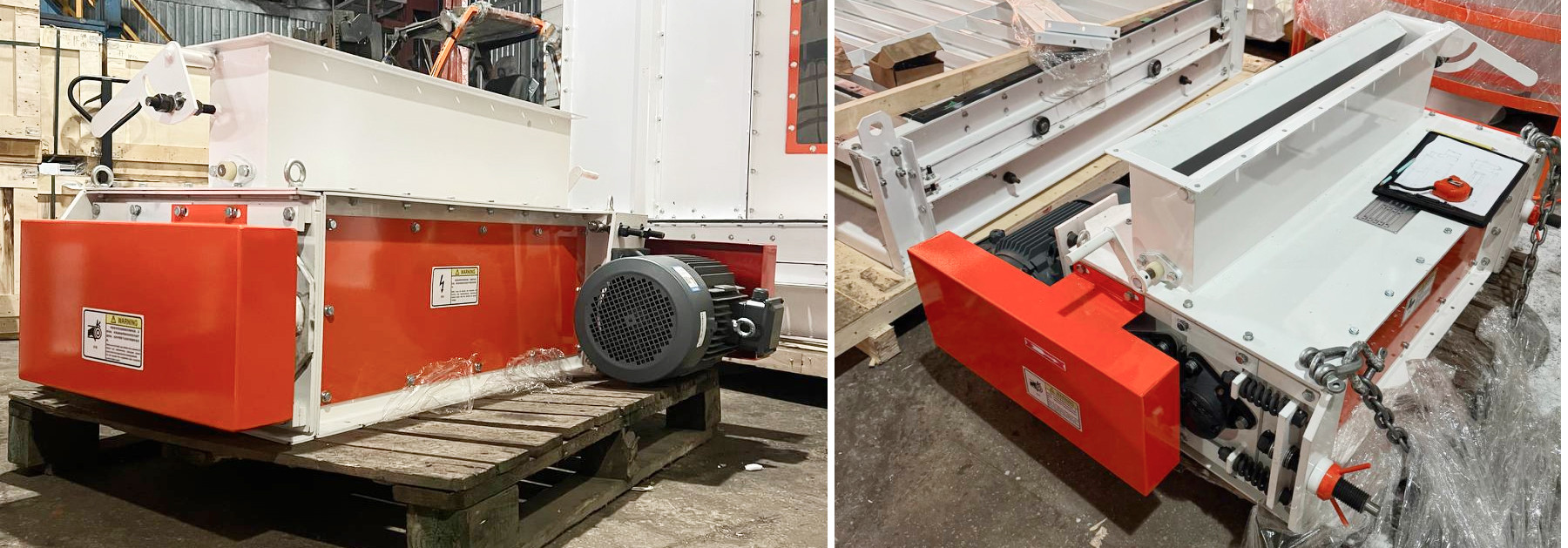
A roller crumbler is specialized equipment designed for controlled reduction of the size of finished pellets without damaging their internal structure. Unlike hammer mills, which operate on the principle of impact crushing of raw materials, the processing of already-formed pellets is carried out without impact. The equipment integrates into the production line after the pellet mill and is used to obtain a fraction of a specified size with minimal formation of fine particles.
Functional Purpose of the Roller Crumbler
The roller crumbler is used for controlled processing of already-formed pellets without altering their structure or physical properties. This treatment does not involve re-granulation or interference with the feed formulation and is carried out as a separate technological stage after pellet formation.
In animal feed production, this equipment is used at stages where the finished pellets are adapted to the specific requirements of different types and formats of feed:
- production of feed for young poultry — increased requirements are set for the fraction composition due to the specific feed consumption patterns at early stages of growth;
- processing of feed for fish farming— the critical parameter is precise fraction calibration, taking into account age groups and housing conditions;
- production of specialized feed for pig farming — fractions with smaller calibers are used compared to feed for adult livestock;
- preparation of components for premixes and functional blends — crushed pellets are used as a technological base for further enrichment.
As a result, animal feed production is organized according to a flexible model: basic pellets are produced in large batches, and then divided into fractions of different purposes according to the requirements of formulations and orders.
Operating Principle and Technological Differences
The non-impact operating principle of the roller crumbler is based on the interaction of two grooved rolls rotating toward each other at different speeds. The pellets pass through an adjustable gap between the rolls and are subjected to controlled compression without random destruction of their structure. Under these conditions, the stability of the particle size distribution and the uniformity of the particles are maintained. The degree of size reduction is determined by the working gap setting and adjusted in accordance with production requirements.
Position of the Roller Crumbler in the Production Line
The roller crumbler is used as an intermediate technological stage between pellet formation and their subsequent preparation for shipment.
In a standard animal feed production scheme, the technological sequence includes the following stages:
- Formation of base pellets of the specified size in the pellet mill.
- Post-pelleting cooling of the pellets.
- Feeding the cooled product to the roller crumbler.
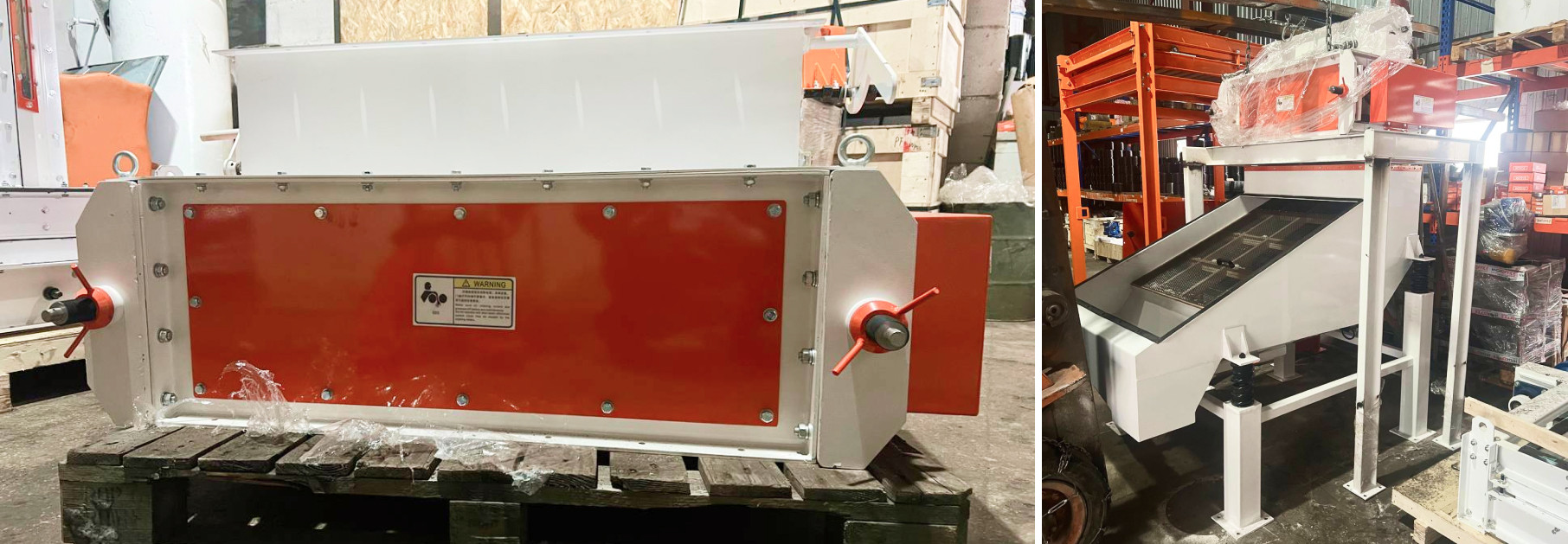
- Screening of the crushed material with separation of the conditioned fraction.
- Return of the fine fraction to the production cycle.
- Further storage or packaging of the finished product.
This configuration of the technological process promotes efficient use of production capacity. The formation of the base pellet is carried out by a single pellet mill, while adjustment of the particle size distribution takes place at the roller crushing stage. As a result, several types of finished products are produced from one base pellet without changing dies or reconfiguring the equipment.
Design Features of the Equipment
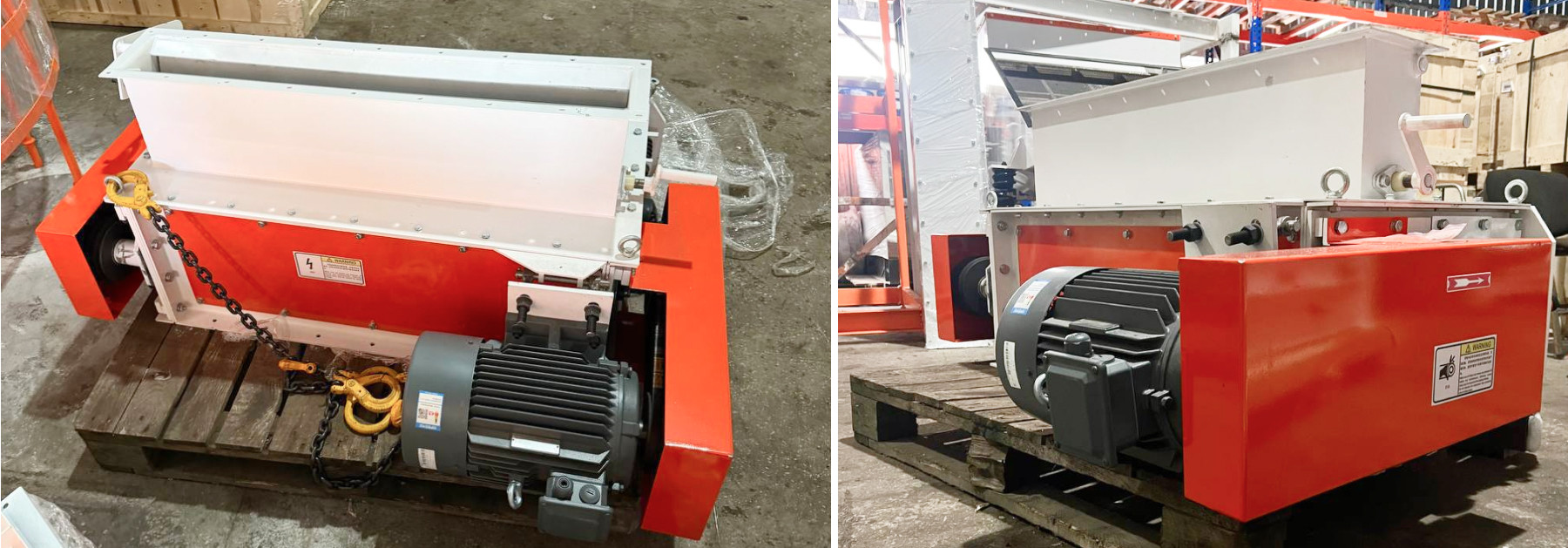
The reliability of the roller crumbler is determined at the design stage and directly depends on the selection of materials and the precision in manufacturing key components. In the production of equipment, the company "UKRBIO TRANS-SERVICE" incorporates these parameters into the design decisions and technological processing of parts, taking into account the modes of industrial operation. The operational characteristics of the equipment are defined by the engineering solutions implemented in its design:
- Grooved Rolls Made of Hardened Steel. The working surfaces are made from high-alloy steel with subsequent heat treatment. This approach increases wear resistance when processing abrasive feed components and extends the life of the rolls without the need for frequent replacements./li>
- Precise Gap Adjustment System. The adjustment mechanism allows for precise changes in the distance between the rolls. Reconfiguration for a different fraction is carried out without disassembling structural elements, simplifying the equipment's operation.
- Rigid Body Construction. The body structure is designed to withstand mechanical loads that occur during the operation of the rolls. Vibration reduction and stability of the technological process are achieved through the rigid frame construction, ensuring continuous operation.
- Bearing Units Adapted for Continuous Operation. Reduced friction in the bearing units and slower wear are achieved through a centralized lubrication system. Scheduled lubrication maintains a stable thermal regime in the units, reducing the likelihood of overheating and extending the life of components without the need for frequent service interventions.
Technological Advantages of Using a Roller Crumbler
In the process of crushing finished pellets in animal feed production, control of the particle size distribution of the final product is of key importance. Feed quality and the stability of the technological cycle directly depend on it. Different types of crushing equipment affect these parameters in different ways, while the roller crumbler stands out due to a number of technological features that form its practical advantages under production conditions:
- uniform fraction size — most of the crushed material is formed within the specified range, reducing the proportion of excessively fine or coarse particles;
- limited dust generation — the controlled compression process minimizes damage to the pellet surface;
- preservation of nutritional value — crushing without impact loads does not disrupt the structure of starch and proteins, which positively affects feed digestibility;
- stability in continuous operation — the equipment design is intended for long-term operation under production loads without overheating or wear of critical components;
- ease of integration — adapting the crumbler to an existing line does not require modification of key technological stages.
Where to Buy a Roller Crumbler for Animal Feed Production
The company "UKRBIO TRANS-SERVICE" manufactures roller crumblers designed for integration into production lines at animal feed plants of various capacities. The equipment is designed taking into account industrial operating conditions and can be used in lines with a single type of raw material or in production environments with a wide range of animal feed products.
When selecting the equipment configuration, the parameters of the existing production line, the requirements for the fraction composition of the finished product, the types of raw materials, and the layout of the equipment in the workshop are all considered. This approach ensures the correct integration of the roller crumbler into the existing technological process without disrupting its stability.
As part of the collaboration, we offer:
- technical consultations regarding the placement of the roller crumbler in the production line and its interaction with adjacent equipment.
- equipment setup for specific types of animal feed, including the selection of optimal roller operating modes.
- operator training on the rules of operation and fraction composition adjustment.
- service maintenance with the possibility of dispatching technical specialists for scheduled tasks or troubleshooting.
Contact us using the phone numbers listed on the website to get detailed information about the technical specifications of the roller crumbler and delivery conditions. "UKRBIO TRANS-SERVICE" provides a professional approach at every stage — from equipment selection to its commissioning in production.